
Stainless Steel Bottle Surface Finishes: Brushed, Mirror, Acrylic, Powder Coating & PVD
Stainless steel bottle surface finishes fall into two families. Mechanical finishes — brushed and mirror polished — change the texture of the steel itself and add no coating. Coating finishes — acrylic spray, powder coating, and PVD or electroplating — add a film that carries the colour, the gloss level, and part of the protection. The two families behave very differently in appearance, hand feel, and durability, and the choice affects both your unit cost and how your customers will use the bottle. The sections below explain each finish, what it looks like, how it wears, and which use cases it suits. If your project needs a finish we do not list here, send us the reference and we will tell you whether it can be produced and what it would cost.
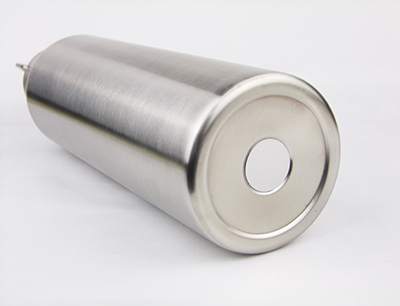
Brush Steel Finish
Brush polishingAbrasive belts or brushes cut a fine, directional grain into the surface, producing a matte look. This is the most common finish on stainless steel bottles.
– Advantages: highly abrasion-resistant, resists fingerprints, and hides light scratches
– Considerations: dark oily marks can lodge in the grain; wipe them off promptly
– Best for: daily commuting, office use, and any high-volume programme where the bottle will be handled roughly
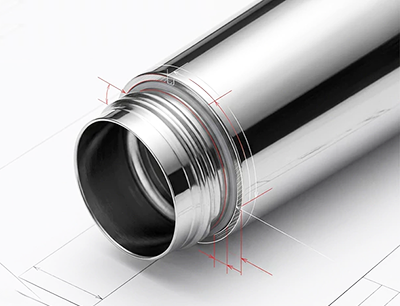
Mirror Steel Finish
Mirror polishingMechanical polishing brings the surface to a mirror-like reflective finish.
– Advantages: premium appearance, strong shelf presence
– Considerations: shows fingerprints and scratches very easily; needs careful handling and regular wiping
– Best for: gift sets, premium retail lines, and display pieces where appearance matters more than abuse resistance
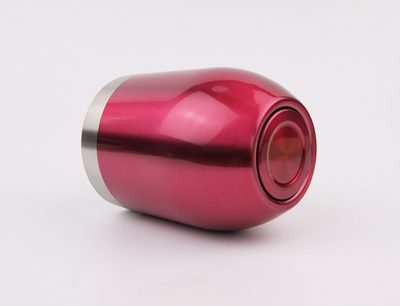
Glossy Acrylic Coating
Glossy transparentGlossy liquid paint sprayed onto the shell and cured. Gloss gives a bright, saturated, high-shine colour.
– Advantages: the widest colour and effect range; lower unit cost than PVD
– Considerations: a paint film can chip or peel at edges and impact points over time;
– Best for: promotional programmes, retail lines where colour range is the priority, and designs that need special effects
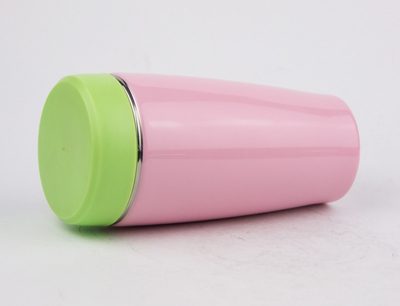
Solid Acrylic coating
Plain solid finishMatte coating gives a soft, low-sheen fog-like surface that reads as more restrained and tends to age better visually.
– Advantages: the widest colour and effect range; lower unit cost than PVD
– Considerations: matte films can develop a slightly tacky feel with heavy long-term use
– Best for: promotional programmes, retail lines where colour range is the priority, and designs that need special effects
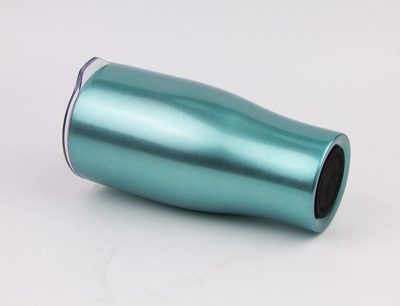
Glitter Acrylic Coating
Pearl glitter coatingPearl (Glitter) effects are built on top of a base acrylic coat. A pearl layer is applied over the colour coat and then sealed, which means these finishes take two
coating passes rather than one.
– Advantages: depth and light shift that a flat colour cannot produce
– Considerations: higher unit cost than a plain solid colour, because of the additional coating pass
– Best for: gift and premium retail lines
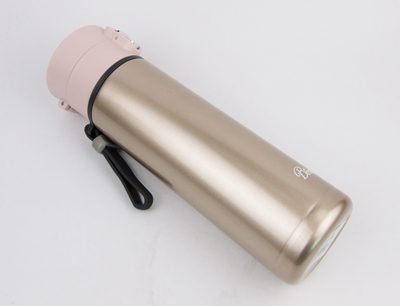
Metallic Acrylic coating
Metallic finishMetallic effects are built on top of a base acrylic coat. A metallic layer is applied over the colour coat and then sealed, which means these finishes take two
coating passes rather than one.
– Advantages: depth and light shift that a flat colour cannot produce
– Considerations: higher unit cost than a plain solid colour, because of the additional coating pass
– Best for: promotional giftware and premium retail lines
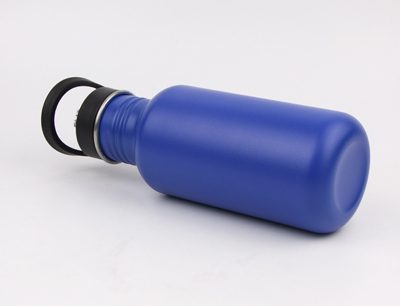
Powder coating
Matt finishDry polymer powder is sprayed electrostatically onto the shell and then cured at high temperature to form a continuous film.
– Advantages: noticeably more abrasion-resistant than liquid paint, and it is the finish we recommend when durability is the priority
– Considerations: colours are mostly matte; powder coating cannot match the gloss and saturation range of acrylic paint
– Best for: outdoor, sport, and any programme where the bottle will be used hard
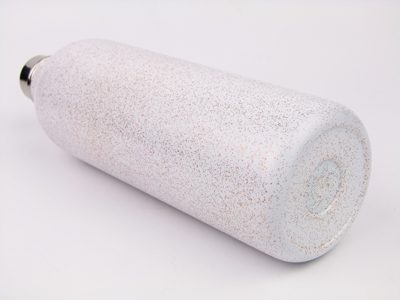
Granite Powder coating
Granite textureGranite texture powder coating is a special type of powder coating that is mixed medical stone materials.
– Advantages: like normal powder coating, this finish is durable and anti-scratch. The stone-look finish texture make it very unique.
– Considerations: it also cannot match the gloss and saturation range of acrylic paint, and the production cost is much higher than normal coating
– Best for: premium outdoor, sport, and any programme where the bottle will be used hard
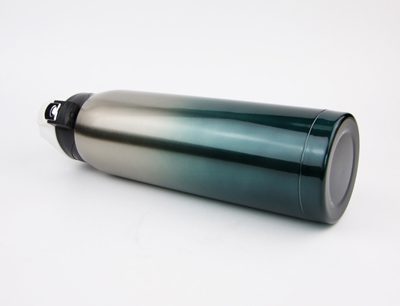
Gradual color coating
Two tone coatingTwo colours are applied to different areas of the same shell, either as a hard split or as a gradient where one colour fades into the other. This is done with masking and a second coating pass.
– Advantages: strong shelf differentiation; works well for team, event, and private label designs
– Considerations: requires masking and a second pass, so unit cost and lead time are higher than a single-colour coating**
– Best for: branded programmes and promotional lines that need to stand out
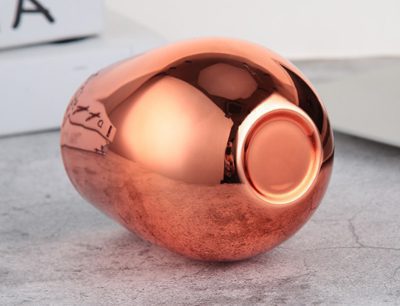
PVD plating
Rose goldenPVD (physical vapour deposition) deposits a much thinner film — typically 3–5 μm — but reaches a hardness of roughly HV800 , and CrN-based PVD layers are self-passivating.
– Advantages: premium metal appearance; PVD offers clearly better hardness and corrosion resistance than electroplating
– Considerations: PVD costs roughly 30–40% more than electroplating; low-quality electroplating can discolour and become patchy within about six months
– Best for: sport and outdoor bottles — choose PVD. Gift and display items — consider electroplating for the cost advantage.